

in
IT Certification Exam Prep & Questions
Latest Cisco, Microsoft, Amazon, Fortinet IT certification exam questions & answers, with practical prep tips to help you pass efficiently!

Valerie. Jones
We are a professional team focused on IT certification exams, committed to providing the most comprehensive and authoritative exam preparation guidance for IT practitioners and learners. We have been deeply involved in the field of IT certification for many years and have a deep understanding of the test points and difficulties of various certification examinations. Our team is composed of experienced IT experts and technical experts. They are not only proficient in IT technology, but also good at converting complex knowledge points into easy-to-understand content. The preparation materials, analysis of real questions and study methods we provide have been carefully selected and summarized, aiming to help you prepare for the exam efficiently and successfully pass the certification exam. Our purpose: to help you avoid detours, prepare for exams efficiently, and achieve a better career.
Most candidates preparing for SOA-C03 focus on exam topics. In reality, the more interesting question is why AWS decided to retire the SysOps Administrator name after years of industry recognition.
What I see in hiring discussions is that the title change reflects something much bigger than certification branding. AWS is signaling that modern operations teams are expected to think beyond servers, dashboards, and tickets. The future belongs to engineers who automate, observe, recover, and continuously improve cloud systems at scale.
Why AWS Retired the SysOps Administrator Name
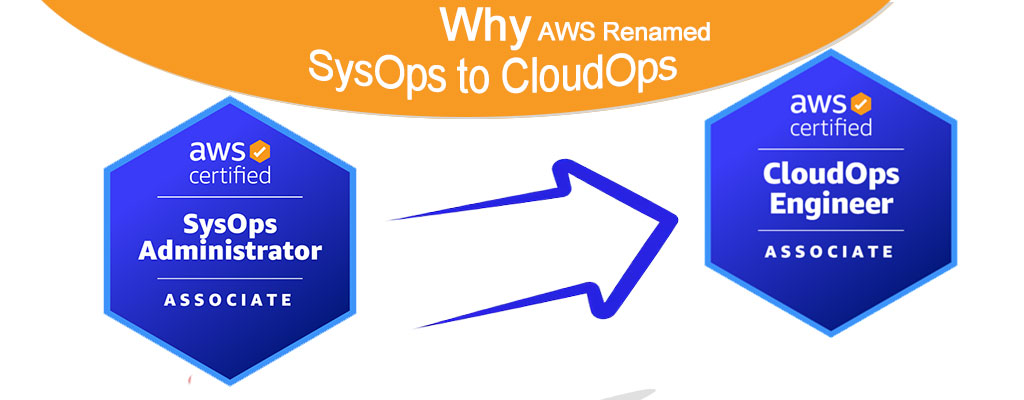
AWS openly states that the certification was renamed to reflect the evolving nature of cloud operations and changing industry terminology. The new credential is officially called AWS Certified CloudOps Engineer – Associate, replacing the older SysOps Administrator title.
Network automation is not difficult because engineers cannot learn Python. The bigger challenge is understanding how infrastructure work changes when manual actions become repeatable workflows.
Why Network Engineers Need to Rethink Automation Before Learning It
When I speak with networking professionals about automation, the first concern is often predictable: “Do I need to become a programmer?”
That question makes sense because traditional networking has always been built around direct interaction. Engineers learn protocols, understand device behavior, troubleshoot failures, and use CLI commands to control infrastructure. The command line becomes a familiar environment where every action has a visible relationship between an engineer and a device.
Automation introduces a different way of thinking.
The biggest shift is not learning a programming language. It is learning how to describe a process that a system can repeat.
A network engineer who manually configures a switch understands the immediate relationship:
Engineer → Device → Configuration
The engineer makes a decision, enters commands, checks the result, and movesforward.
Comments are closed.