
Experienced engineers often expect CCDE 400-007 to be easier because they already understand networking. The difficulty appears when the exam stops asking how technology works and starts asking why a design decision makes sense.
The Experience Trap: Why Senior Engineers Still Find CCDE 400-007 Difficult
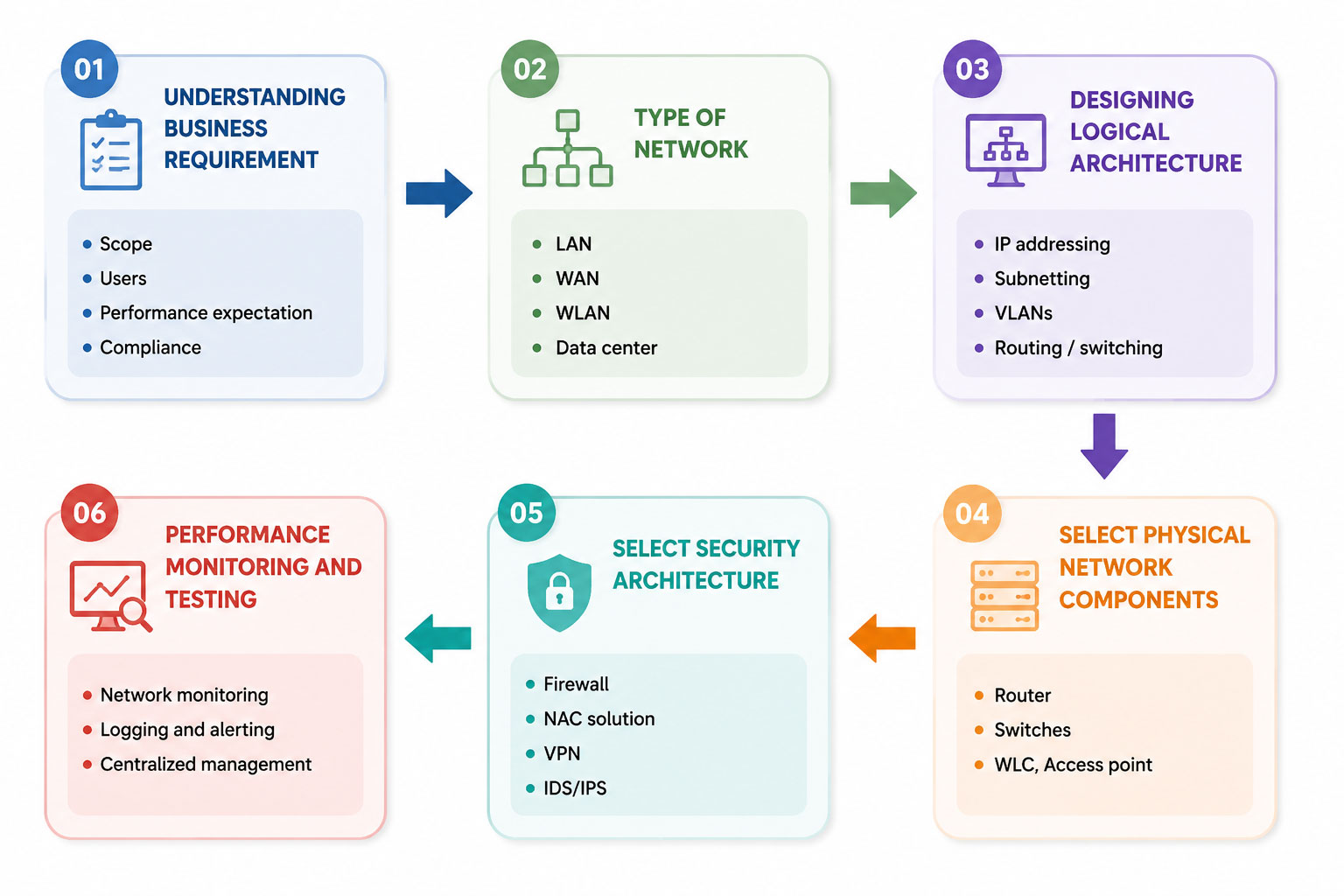
One of the most interesting patterns around CCDE 400-007 preparation is that the candidates who struggle are often not beginners. They are usually engineers with years of enterprise networking experience, strong troubleshooting backgrounds, and deep technical knowledge.
That creates an uncomfortable question: if someone has already designed networks, solved outages, and managed complex infrastructure, why does a network design certification still feel difficult?
The answer is that experience does not always develop the same skills that architecture requires.
Most network engineers build expertise through operational responsibility. They learn how to deploy technologies, resolve failures, improve performance, and maintain stability. Those skills are critical because businesses depend on reliable infrastructure every day.
However, architecture decisions happen before implementation begins.
A network architect is not usually asked:
“How do I configure this feature?”
The more difficult question is:
“Should this feature exist in this design at all?”
That difference changes everything.
A senior engineer may immediately understand how BGP works, how SD-WAN operates, or how segmentation can be implemented. But CCDE evaluates whether that engineer can decide when a particular approach is appropriate, what limitations it creates, and how it aligns with business objectives.
This is why experienced professionals sometimes underestimate Cisco CCDE certification. They approach it as an advanced technology exam when it is closer to a decision-making evaluation.
| Network Engineering Focus | Network Architecture Focus |
|---|---|
| How do I implement this? | Why is this design appropriate? |
| How does this feature work? | What business problem does this solve? |
| How do I troubleshoot failure? | How should the design handle failure? |
| How can I optimize this device? | How should the entire system evolve? |
The transition is not about becoming less technical. It is about learning how technical decisions fit into a larger business and operational context.
CCDE 400-007 Tests Decision Quality, Not Just Technical Knowledge
Cisco positions CCDE as an expert-level certification focused on network design. The exam evaluates whether candidates can translate requirements into architecture decisions, evaluate alternatives, and justify design choices. Cisco CCDE Certification
This distinction matters because real-world architecture rarely has a single correct answer.
A company expanding internationally might have several technically valid options:
- Build a centralized architecture
- Deploy a distributed model
- Use different WAN strategies
- Increase security controls
- Reduce operational complexity
Every option solves some problems while creating others.
The architect’s responsibility is not choosing the most advanced technology. It is selecting the design that best matches the organization’s requirements.
For example, imagine an enterprise evaluating a new WAN architecture.
A purely technical mindset might focus on:
- bandwidth
- latency
- routing protocols
- encryption capabilities
An architecture mindset asks additional questions:
- How quickly will new locations need to be added?
- Who manages the environment?
- How much operational complexity can the team support?
- What applications are business-critical?
- How will security requirements change over time?
The technology decision comes after understanding the environment.
This is the core reason CCDE exam strategy cannot rely only on expanding technology knowledge. Candidates must practice evaluating constraints and defending decisions.
A strong design decision considers:
- Business requirements
- Technical feasibility
- Scalability
- Security impact
- Operational complexity
- Long-term maintainability
CCDE challenges engineers because many answers can be technically correct. The candidate must determine which answer is architecturally appropriate.
The Preparation Mistake Experienced Engineers Make
The most common mistake during CCDE 400-007 preparation is studying more technologies while avoiding the harder skill: design reasoning.
Experienced engineers naturally repeat the learning method that worked before.
When preparing for technical certifications, many professionals succeed by building knowledge:
Learn the protocol.
Understand the commands.
Practice the configuration.
Review troubleshooting scenarios.
That approach works when the exam measures implementation ability.
CCDE requires a different preparation model.
A candidate may understand multiple routing technologies but still struggle with a scenario asking which design best supports a global enterprise with limited operational resources.
The missing skill is not technology awareness.
It is connecting technology decisions to organizational outcomes.
Consider a security design decision.
An engineer may know many security technologies:
- firewall segmentation
- identity controls
- encryption methods
- access policies
But architecture requires answering:
Should security controls be centralized or distributed?
Will the design slow business operations?
Can the security model scale as the company grows?
How will teams maintain it?
The best design is rarely the one with the maximum number of features. It is the one that balances protection, usability, cost, and operational reality.
This is why successful candidates change their preparation approach. They stop collecting technologies and start analyzing design problems.
How Successful CCDE Candidates Change Their Preparation Approach
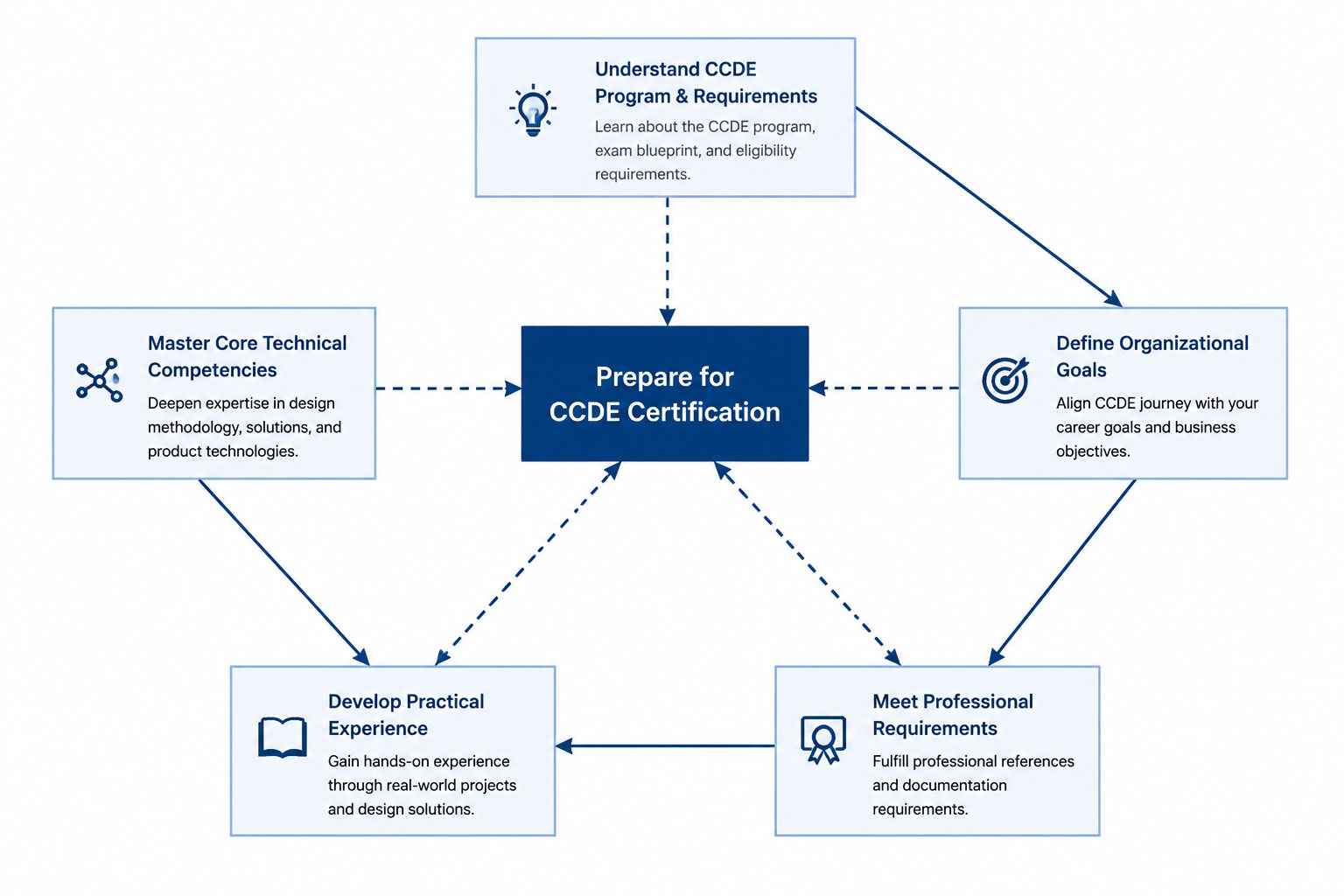
The biggest change successful candidates make is changing the questions they ask.
Instead of asking:
“What technology should I study next?”
They ask:
“What problem is this technology solving?”
That shift creates a different learning process.
A stronger CCDE study approach focuses on architecture patterns, design principles, and trade-offs.
For example, when studying enterprise connectivity, do not only compare technologies.
Ask:
Why would one organization choose one approach while another chooses something different?
What business requirement created that decision?
What limitations appeared after deployment?
What would happen if the company doubled in size?
Architecture thinking develops through these questions.
Another important preparation method is practicing design explanations.
A real architect must communicate decisions to different audiences:
- technical teams
- business leaders
- security teams
- operations groups
Knowing the answer is not enough. You need to explain why the answer is appropriate.
A useful exercise is taking a scenario and writing:
- The business requirement
- The possible design options
- The advantages and disadvantages of each option
- The operational impact
- The final recommendation
This mirrors how architecture decisions happen in real enterprises.
Where CCDE Fits in the Modern Network Career Path
The role of network architects has changed significantly.
Modern infrastructure is no longer only about routers, switches, and protocols. Enterprise environments now combine:
- cloud connectivity
- hybrid infrastructure
- automation
- security architecture
- AI-assisted operations
- application-driven networking requirements
This does not make architecture less important. It makes architecture more complex.
The difficult decisions are no longer limited to choosing networking technologies. Architects increasingly need to understand how different systems interact.
For example:
A hybrid cloud design requires decisions about connectivity, security boundaries, workload placement, and operational ownership.
An automation-driven environment requires decisions about standardization, APIs, workflows, governance, and reliability.
Cisco’s certification evolution reflects this industry change. Automation is no longer positioned as a separate developer-focused area. Cisco has moved automation skills into the core certification portfolio through the Cisco Automation certification track, including CCNA Automation, CCNP Automation, and CCIE Automation. Cisco Automation Certifications
This change represents a broader industry direction: modern network professionals need both infrastructure knowledge and software-driven operational skills.
For career planning, different Cisco paths serve different goals.
CCNP Enterprise Certification is designed for professionals building advanced enterprise networking expertise.
CCIE Enterprise Infrastructure Certification focuses on expert-level implementation and troubleshooting.
CCDE is different because the primary question is not:
“Can you build the network?”
It is:
“Can you design the right network?”
Choosing the Right Preparation Resources for CCDE 400-007
Good preparation resources should help candidates develop judgment, not just increase information volume.
The foundation should come from Cisco’s official resources:
- CCDE exam topics
- Cisco documentation
- architecture guides
- design recommendations
- Cisco Learning resources
Cisco Learning Network provides certification communities and learning discussions where candidates can understand exam expectations and exchange preparation experiences.
Cisco Press books remain useful for structured technical explanations and architecture concepts. Cisco Press
However, candidates should avoid treating any resource as a shortcut.
Practice materials can be useful when they help identify weaknesses, improve scenario analysis, and expose candidates to design-style questions.
Some candidates use practice assessment resources such as Leads4Pass CCDE 400-007 Practice Materials to evaluate readiness and review scenario-based approaches.
The important distinction is how these resources are used.
The goal should not be memorizing possible answers.
The goal should be understanding why one design decision is stronger than another.
Final Perspective: CCDE Is a Career Decision Before It Is an Exam Decision
CCDE 400-007 is difficult because it requires experienced engineers to redefine what expertise means.
Technical depth matters. Without strong networking knowledge, architecture decisions become impossible.
But technical knowledge alone is not enough.
The strongest architects are not the people who know every feature of every technology.
They are the people who understand how to make decisions when every option has advantages and disadvantages.
CCDE is a good fit for professionals who want to move toward:
- enterprise architecture
- technical leadership
- large-scale design decisions
- strategic infrastructure planning
It may not be the right investment for engineers who prefer hands-on implementation work or deep operational troubleshooting.
The most important preparation change is not learning more commands.
It is learning to think like the person who decides which commands should exist in the first place.
Frequently Asked Questions
1. Is CCDE 400-007 only for network architects?
No. CCDE is designed for professionals involved in network design decisions, but experienced engineers, consultants, and technical leaders can benefit from the skills it develops.
2. Do I need CCIE before taking CCDE 400-007?
No. CCIE is not a requirement for CCDE. However, strong enterprise networking experience is highly valuable because the exam assumes familiarity with complex environments.
3. What is the hardest part of CCDE preparation?
For many experienced engineers, the hardest part is changing from implementation thinking to architecture thinking. The challenge is evaluating trade-offs rather than finding a single technical answer.
4. How has automation changed the value of CCDE?
Automation has increased the importance of architecture decisions. Modern architects must consider programmability, operational workflows, and infrastructure scalability alongside traditional networking concepts.
5. Is CCDE still worth pursuing in 2026?
For professionals targeting architecture or technical leadership roles, CCDE remains valuable because organizations still need experts who can design reliable, scalable, and manageable infrastructure across increasingly complex environments.


Comments are closed.