
Many engineers look at SD-WAN and assume the opportunity has already passed. After all, SD-WAN stopped being the industry’s hottest buzzword years ago. Yet when I sit in architecture reviews, branch modernization projects, and cloud migration discussions in 2026, SD-WAN keeps showing up in the conversation.
That raises a more useful question than “Is this certification worth it?” The real question is whether NSE6_SDW_AD-7.6 represents skills that organizations are still actively paying for, even as AI, SASE, and cloud-native networking dominate headlines.
The Real Debate Isn’t About Certification

Most certification discussions start in the wrong place.
Engineers often ask whether a particular certification will help them get a job. Hiring managers rarely think that way. They care about whether a candidate can solve operational problems that affect the business.
That distinction matters because SD-WAN has reached a level of maturity where basic product knowledge is no longer impressive. Ten years ago, simply understanding SD-WAN concepts could differentiate an engineer. In 2026, it is increasingly considered part of the modern networking toolkit.
The market has matured, but the operational challenges have not.
Enterprise WAN environments remain surprisingly complex. Branch offices still rely on multiple circuits. Cloud applications still behave differently across regions. Business-critical traffic still competes for bandwidth with everything else. Security teams still demand visibility and policy enforcement across increasingly distributed environments.
The engineers who remain valuable are not the ones who can explain SD-WAN concepts from a certification blueprint. They are the ones who understand how connectivity, security, cloud access, and user experience intersect in production environments.
That is the lens through which NSE6_SDW_AD-7.6 should be evaluated.
Why WAN Modernization Is Still Unfinished
One of the biggest misconceptions in networking is that WAN transformation is already complete.
It is not.
Many organizations completed their first SD-WAN deployments years ago. What they are doing now is often far more difficult. They are refining architectures, integrating security controls, connecting multiple cloud environments, consolidating management platforms, and preparing for broader SASE initiatives.
In many enterprises, the first SD-WAN project solved a transport problem. The second phase is attempting to solve an operational problem.
Those are very different challenges.
Remote and hybrid work models have permanently changed traffic patterns. SaaS applications now represent a significant portion of enterprise workloads. Multi-cloud environments have become normal rather than exceptional. Security requirements continue expanding as organizations adopt Zero Trust strategies and cloud-delivered security services.
Traditional MPLS-centric architectures were designed for a different era.
This does not mean MPLS disappears. In many environments it remains important. What has changed is that organizations increasingly expect flexibility. They want intelligent path selection, application-aware routing, centralized policy management, and integrated security capabilities.
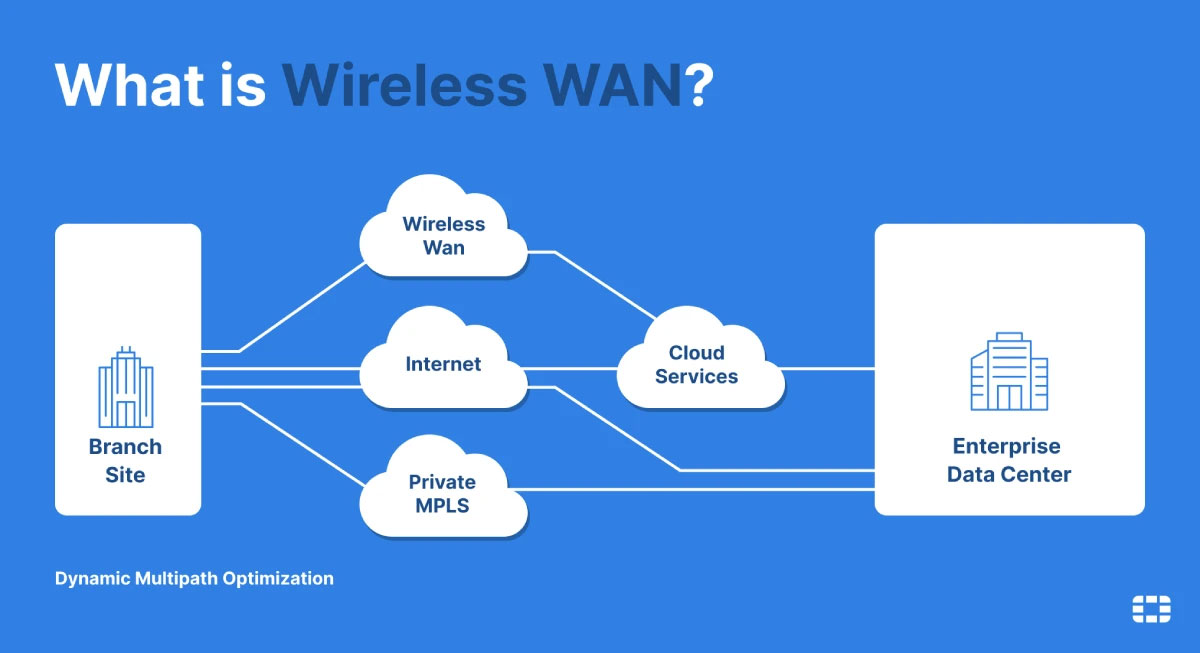
Fortinet continues positioning SD-WAN as part of a broader Security Fabric strategy rather than a standalone networking feature. That direction aligns with what many enterprises are actually trying to achieve: fewer silos and greater operational consistency.
The interesting trend is that networking teams are now being evaluated less on uptime alone and more on application experience.
That changes the skill sets organizations prioritize.
Most Engineers Are Asking the Wrong Career Question
A common question in 2026 sounds something like this:
“Has SD-WAN become a commodity skill?”
The better question is:
“Which SD-WAN skills have become commodities, and which still create value?”
There is a significant difference.
Basic deployment knowledge is becoming increasingly standardized. Vendors have simplified implementation. Automation tools have reduced configuration effort. AI-assisted operations continue improving troubleshooting and visibility.
As a result, some engineers assume demand will decline.
What I am seeing is different.
The demand is shifting upward.
Organizations need fewer people who can simply configure policies. They need more people who can make architectural decisions.
A consultant involved in a global retail deployment recently described the challenge perfectly. The technology worked as expected. The difficult part was determining application priorities across hundreds of locations while balancing security, compliance, and user experience requirements.
That is not a configuration problem.
That is an operational design problem.
The same pattern appears repeatedly across industries.
The value is moving away from implementation mechanics and toward architecture, governance, optimization, and integration.
Engineers who understand that shift are positioning themselves far better than those focused exclusively on passing exams.
What NSE6_SDW_AD-7.6 Actually Represents
The certification itself is less important than what it signals.
At its core, NSE6_SDW_AD-7.6 reflects an understanding of how modern enterprises manage connectivity across distributed environments.
That includes application-aware routing, overlay networking, WAN orchestration, branch connectivity, performance optimization, and security integration. Those topics appear in certification objectives, but the real significance lies beneath them.
Think about what organizations are trying to accomplish.
They want Microsoft Teams traffic to perform consistently during network congestion.
They want cloud applications to remain responsive even when a primary circuit degrades.
They want security controls enforced without creating operational bottlenecks.
They want branch deployments to scale without requiring engineers to manually touch every location.
The certification is ultimately about supporting those business outcomes.
One hiring manager I spoke with recently made an observation that reflects a growing trend. He said that candidates who understand SD-WAN concepts often perform better during architecture discussions because they naturally think about applications and user experience rather than focusing exclusively on network devices.
That observation highlights something important.
The certification increasingly represents a way of thinking rather than a collection of technical tasks.
The Overlooked Value of Fortinet’s Approach
Discussions about Fortinet SD-WAN often focus on feature comparisons.
That is usually the least interesting part of the conversation.
Cisco, Palo Alto Networks, Versa, and VMware VeloCloud all provide capable solutions. Large enterprises can succeed with any of them when the deployment aligns with business requirements.
The more important question is why organizations choose one platform over another.
Fortinet’s advantage is not necessarily that its SD-WAN capabilities are dramatically different. The advantage is that networking and security increasingly live inside the same operational conversation.
Years ago, WAN teams and security teams often worked independently.
Today, those boundaries are fading.
When organizations evaluate branch architectures, they frequently assess:
- Connectivity
- Security inspection
- Cloud access
- Zero Trust initiatives
- Centralized visibility
- Operational efficiency
At the same time.
Fortinet’s Security Fabric strategy aligns with that reality.
This does not mean Fortinet automatically wins every evaluation. It does mean that professionals working within Fortinet environments are increasingly exposed to both networking and security disciplines.
That exposure can create career advantages that extend well beyond SD-WAN itself.
A Lesson Many Engineers Learn Too Late
One pattern appears consistently across enterprise projects.
The technical deployment is rarely the hardest part.
Operations are.
A branch rollout might be completed successfully. Connectivity works. Traffic policies function correctly. Dashboards look healthy.
Then six months later, the organization struggles with policy governance, change management, troubleshooting ownership, and operational consistency across hundreds of locations.
That is where experienced engineers become valuable.
I have seen highly certified professionals struggle because they viewed networking as a collection of technologies rather than a business service. I have also seen engineers with fewer certifications become indispensable because they understood operational realities.
This is why I believe many certification candidates focus too heavily on exam preparation and not enough on deployment thinking.
The industry rewards problem solvers more consistently than product specialists.
NSE6_SDW_AD-7.6 is most valuable when it develops that broader perspective.
What About AI?
No discussion in 2026 feels complete without addressing AI.
Some engineers worry that AI-assisted networking will reduce demand for SD-WAN expertise.
The concern is understandable.
Automation continues improving. Troubleshooting tools are becoming more intelligent. Policy recommendations are increasingly automated.
Yet history suggests a different outcome.
Networking has experienced multiple automation waves already. Routing automation, infrastructure as code, orchestration platforms, and cloud management tools all promised dramatic reductions in manual effort.
What actually happened?
The nature of work changed.
Organizations became more ambitious.
As operational tasks became easier, expectations increased.
Instead of managing ten sites, teams managed hundreds.
Instead of supporting one cloud provider, they supported several.
Instead of focusing solely on connectivity, they became responsible for security, compliance, and user experience.
AI is likely to accelerate that pattern rather than reverse it.
Engineers who understand architecture, governance, and operational strategy will remain valuable because those decisions extend beyond what automation platforms can currently provide.
Career Recommendations Based on Where You Are Today
For early-career professionals, SD-WAN should usually be viewed as a secondary specialization.
Build strong foundations first. Routing, switching, security fundamentals, and troubleshooting remain more important than any single SD-WAN technology.
For firewall administrators, the equation is different.
Many FortiGate deployments already include networking functions alongside security capabilities. Understanding SD-WAN often increases operational influence because it allows administrators to participate in broader infrastructure discussions rather than remaining confined to security operations.
Enterprise network engineers may see the strongest return.
SD-WAN complements existing expertise in routing, WAN architecture, VPN technologies, and cloud connectivity. It expands rather than replaces traditional networking knowledge.
Security professionals should pay close attention as well.
The convergence of networking and security is no longer a future trend. It is an operational reality. Professionals who understand both domains often find themselves involved in strategic projects tied to SASE, Security Fabric deployments, Zero Trust initiatives, and branch transformation programs.
As for learning resources, official Fortinet documentation should remain the primary reference point. Some professionals supplement their preparation with independent platforms such as Leads4Pass and other practice resources, but real-world lab work and production experience consistently provide the greatest long-term value.
Looking Beyond SD-WAN
The strongest argument for investing in NSE6_SDW_AD-7.6 has surprisingly little to do with SD-WAN itself.
The certification sits at the intersection of several industry trends that continue gaining momentum:
- SASE
- Security Fabric architectures
- ZTNA
- Branch transformation
- Cloud-delivered security
- AI-assisted operations
- Hybrid enterprise networking
Those initiatives are not replacing SD-WAN.
They are building on top of it.
That distinction matters because many engineers mistakenly evaluate technologies in isolation. Organizations do not buy technologies in isolation. They build operating models.
The professionals who understand how networking, security, cloud connectivity, and user experience fit together will remain relevant regardless of which acronym dominates the industry next year.
Conclusion
If your goal is simply to collect another certification, NSE6_SDW_AD-7.6 is probably not the most important career decision you will make in 2026.
If your goal is to develop expertise in one of the areas where networking and security continue to converge, the conversation becomes much more interesting.
The real value is not the credential. It is the perspective behind it.
The engineers who will thrive over the next several years are unlikely to be defined by SD-WAN alone. They will be the professionals who understand that modern infrastructure is no longer divided into networking, security, and cloud silos. It is one operational ecosystem. Viewed through that lens, Fortinet SD-WAN remains less of a legacy specialization and more of a gateway into the future direction of enterprise architecture.

Comments are closed.