
Use up and down arrow keys to resize the meta box pane.
Many engineers spend months studying wireless technologies and still struggle when confronted with real enterprise problems. The issue usually isn’t effort. It’s focus. In my experience working with enterprise wireless teams and certification candidates, many 350-101 WLCOR candidates invest heavily in topics that matter while overlooking the skills that consume most of a wireless engineer’s day.
That’s the gap worth discussing.
This isn’t an exam problem. It’s an industry problem.
📡 The RF Obsession

There is a pattern I continue to see among engineers entering the modern CCNP Wireless track.
A disproportionate amount of study time goes into RF.
Channels.
Power levels.
Antenna characteristics.
Cell sizing.
Coverage design.
To be clear, none of these topics are unimportant. RF remains the foundation of enterprise wireless networking. A wireless engineer who lacks RF knowledge will eventually run into trouble, especially in high-density deployments, healthcare environments, manufacturing facilities, or large campuses.
The problem begins when candidates assume RF is where most operational problems originate.
In practice, that’s often not the case.
One of the most surprising things engineers discover after moving into production support roles is how frequently wireless incidents have little to do with RF itself. Users report connectivity issues. Application performance degrades. Devices fail onboarding processes. Authentication requests are rejected. Roaming behaves inconsistently.
The first reaction is often to investigate signal strength.
The actual cause frequently lives somewhere else.
RF matters.
But enterprise wireless operations involve much more than RF.
🔍 What Enterprise Wireless Engineers Actually Do
When people imagine wireless engineering, they often picture spectrum analysis, access point placement, and controller configuration.
Those activities certainly exist.
They just don’t represent the majority of operational work in many enterprise environments.
A typical week may involve troubleshooting client onboarding issues, investigating authentication failures, reviewing policy assignments, working with security teams, validating switch configurations, analyzing application behavior, and responding to user experience complaints.
Notice how many of those tasks extend beyond the wireless infrastructure itself.
The reality is that modern enterprise wireless environments are deeply interconnected with other systems.
Wireless engineers regularly find themselves collaborating with:
- Security teams
- Identity management teams
- Network operations teams
- Switching teams
- Application owners
- Endpoint management teams
The most effective engineers understand how all these pieces fit together.
That understanding often becomes more valuable than memorizing isolated technical details.
🚶 Roaming Problems Rarely Stay Wireless
One healthcare deployment I worked on remains a good example.
Users complained about intermittent application disconnects while moving throughout the facility. Initial discussions immediately focused on RF design. Engineers reviewed coverage maps, examined signal levels, and evaluated channel assignments.
Nothing looked abnormal.
The wireless network was functioning as designed.
After deeper investigation, the actual issue turned out to involve authentication timing during client transitions between locations. The symptoms appeared wireless. The root cause was much broader.
Situations like this are common.
Roaming problems frequently involve multiple components:
- Wireless infrastructure
- Authentication systems
- Client operating systems
- Security policies
- Network services
Candidates who study wireless exclusively through the lens of RF often struggle when faced with these scenarios.
The strongest engineers learn to investigate entire workflows rather than individual technologies.
🔐 Authentication Is Often The Real Challenge
Authentication failures create some of the most frustrating support cases in enterprise wireless environments.
From the user’s perspective, Wi-Fi simply doesn’t work.
From the engineer’s perspective, the problem could exist almost anywhere.
The access point may be functioning correctly.
The controller may be functioning correctly.
The wireless design may be functioning correctly.
Yet users still cannot connect.
What makes these issues difficult is that authentication workflows often span multiple systems. Certificates, identity stores, policy engines, security platforms, onboarding services, and network infrastructure all contribute to the final outcome.
This is one reason many experienced engineers place so much emphasis on troubleshooting methodology.
Knowing how a process works is valuable.
Knowing how to isolate failures within that process is far more valuable.
⚠️ The Gap Between Exam Preparation And Production Networks
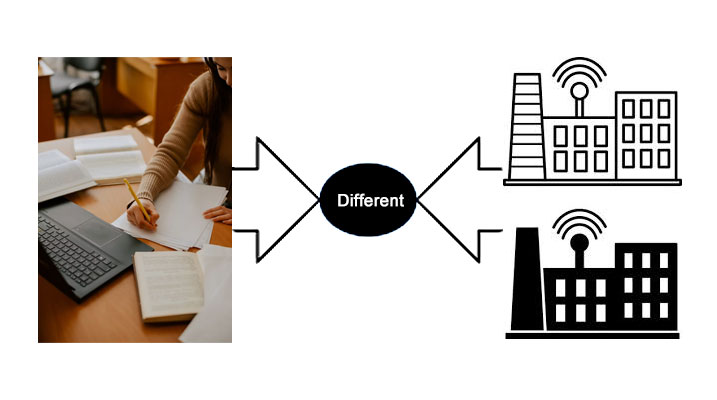
Many candidates become highly effective at completing structured lab exercises.
That’s not a criticism.
Labs are essential.
The issue is that production environments don’t behave like guided exercises.
Real networks rarely provide obvious clues.
Users don’t open tickets saying:
“My certificate validation process failed because of an authorization mismatch.”
They simply report:
“The Wi-Fi isn’t working.”
The engineer must determine everything else.
This requires a different type of thinking.
It requires forming hypotheses, validating assumptions, collecting evidence, eliminating possibilities, and identifying root causes.
That process cannot be learned through memorization alone.
It develops through troubleshooting experience.
🧠 The Most Underrated Skill In WLCOR Preparation
If I were asked to identify one skill that receives less attention than it deserves, my answer would be troubleshooting.
Not troubleshooting commands.
Not troubleshooting checklists.
Troubleshooting thinking.
There is a significant difference.
Strong troubleshooters approach problems differently. They avoid jumping to conclusions. They gather information before making decisions. They understand dependencies between systems.
Most importantly, they recognize patterns.
Over time, engineers begin noticing recurring behaviors.
Certain authentication failures generate familiar symptoms.
Specific roaming issues create recognizable patterns.
Particular controller problems leave predictable traces in logs and monitoring tools.
This pattern recognition dramatically accelerates troubleshooting.
It also reflects the type of operational thinking that organizations increasingly value.
⚙️ The Quiet Shift Happening Inside Cisco Wireless
The wireless industry itself is evolving.
A decade ago, many wireless teams spent most of their time focused on infrastructure deployment and maintenance.
Today’s environments increasingly emphasize visibility, automation, operational efficiency, and user experience.
This shift is visible throughout Cisco’s wireless ecosystem.
Tools such as Cisco Catalyst Center continue expanding beyond simple management functions. Assurance capabilities, analytics, operational visibility, and workflow automation now play a larger role in day-to-day operations than many candidates realize.
When engineers investigate performance complaints today, they often begin with visibility platforms rather than controller interfaces.
That represents a significant change in operational workflow.
Candidates who ignore these developments risk preparing for yesterday’s environment rather than today’s reality.
🤖 Automation Is No Longer A Specialist Topic
Automation remains one of the most misunderstood areas within enterprise networking.
Many engineers still view it as something reserved for programmers.
That perception is becoming increasingly outdated.
Modern enterprise environments demand consistency, scalability, and operational efficiency. Automation helps organizations achieve those goals.
This doesn’t mean every wireless engineer must become a software developer.
It does mean understanding APIs, automation workflows, and operational integrations is becoming increasingly relevant.
Cisco’s current training ecosystem reflects this reality.
The industry is moving toward greater operational intelligence and automation because network environments continue growing in complexity.
Ignoring that trend doesn’t make it disappear.
📊 The Difference Between Memorization And Operational Readiness
The distinction becomes easier to understand when comparing two common candidate profiles.
| Focus Area | Memorization-Oriented Candidate | Operationally Focused Candidate |
|---|---|---|
| Learning Style | Studies facts and features | Studies workflows and outcomes |
| Lab Approach | Follows instructions | Creates and investigates failures |
| Troubleshooting | Relies on recall | Relies on analysis |
| Decision Making | Feature-centric | Problem-centric |
| Production Readiness | Moderate | Higher |
| Long-Term Growth | Limited by memorization | Expanded through experience |
This comparison doesn’t suggest memorization lacks value.
Every engineer must learn technical details.
The question is whether those details are being connected to real operational scenarios.
That’s where many candidates struggle.
🚀 If I Were Preparing For 350-101 Today
My approach would be different from what many candidates expect.
I would spend less time chasing obscure facts and more time understanding behavior.
I would deliberately create failures in lab environments.
Authentication failures.
Roaming failures.
Policy assignment failures.
Client onboarding failures.
Then I would investigate them.
The goal wouldn’t be to memorize solutions.
The goal would be to understand how systems behave when something breaks.
I would also spend more time learning operational workflows.
How does a client move through the network?
Where can authentication fail?
What data sources help identify root causes?
How do monitoring platforms surface problems?
These questions mirror the challenges engineers face in production environments every day.
Some candidates use practice-oriented resources such as https://www.leads4pass.com/350-101.html after completing official training to identify knowledge gaps before the exam. Used responsibly, resources like these can help reveal weak areas. What matters most, however, is validating knowledge through labs, troubleshooting exercises, and operational analysis rather than relying solely on exam-focused repetition.
🌐 Why Broader Networking Knowledge Still Matters
One thing that consistently stands out among strong wireless engineers is the breadth of their networking knowledge.
A solid CCNA foundation remains valuable because wireless networks depend on switching, routing, DHCP, DNS, security, and identity services.
The same observation applies to engineers pursuing ENCOR, ENWLSD, ENWLSI, or broader CCNP Enterprise studies.
Wireless problems rarely stay confined to wireless infrastructure.
The deeper an engineer understands the surrounding ecosystem, the faster they can identify where problems originate.
That’s why some of the strongest wireless professionals I’ve worked with don’t think of themselves as wireless specialists first.
They think of themselves as network engineers who happen to specialize in wireless.
That perspective changes how they approach problems.
Conclusion
Many 350-101 WLCOR candidates are not struggling because they lack discipline or commitment. In many cases, they’re studying extensively.
The challenge is that modern enterprise wireless environments reward a broader set of skills than many candidates expect.
RF knowledge remains important. So do controller architectures, protocols, and wireless design principles. But enterprise wireless operations increasingly revolve around troubleshooting workflows, authentication systems, operational visibility, automation platforms, and cross-team collaboration.
Enterprise wireless environments continue expanding beyond traditional wireless boundaries. Identity services, security platforms, analytics tools, APIs, and operational workflows influence daily outcomes more than ever before. That’s why some candidates arrive at the exam well prepared yet still feel uncomfortable in production environments. The gap often isn’t technical knowledge. It’s exposure to how modern wireless networks actually behave when multiple systems interact and something stops working.
FAQs
What is the biggest mistake 350-101 WLCOR candidates make?
Many candidates spend too much time focusing on isolated technical topics while spending too little time developing troubleshooting and operational thinking skills.
Is RF still important for WLCOR preparation?
Absolutely. RF remains a critical component of enterprise wireless networking. The issue is treating RF as the only area that matters.
Why is troubleshooting considered so valuable?
Because real-world network issues rarely announce their root cause. Effective troubleshooting allows engineers to identify and resolve complex problems efficiently.
How important is Cisco Catalyst Center knowledge?
Increasingly important. Modern enterprise environments rely heavily on visibility, analytics, assurance, and operational workflows that extend beyond traditional controller management.
Should candidates focus more on labs or memorization?
Both matter, but hands-on troubleshooting labs typically provide deeper understanding because they simulate the uncertainty engineers encounter in production networks.


Comments are closed.