

in
IT Certification Exam Prep & Questions
Latest Cisco, Microsoft, Amazon, Fortinet IT certification exam questions & answers, with practical prep tips to help you pass efficiently!

Valerie. Jones
We are a professional team focused on IT certification exams, committed to providing the most comprehensive and authoritative exam preparation guidance for IT practitioners and learners. We have been deeply involved in the field of IT certification for many years and have a deep understanding of the test points and difficulties of various certification examinations. Our team is composed of experienced IT experts and technical experts. They are not only proficient in IT technology, but also good at converting complex knowledge points into easy-to-understand content. The preparation materials, analysis of real questions and study methods we provide have been carefully selected and summarized, aiming to help you prepare for the exam efficiently and successfully pass the certification exam. Our purpose: to help you avoid detours, prepare for exams efficiently, and achieve a better career.
Most Cisco 350-201 preparation content looks complete at first glance—structured modules, tool breakdowns, and “exam-ready” checklists. Yet in real SOC environments, engineers who studied these materials often hesitate when signals stop agreeing. A firewall log suggests one thing, identity systems suggest another, and XDR correlation layers quietly disagree with both. The failure rarely happens during learning. It happens when learning meets operational ambiguity, where no documentation stays fully valid long enough to rely on.
Content Fails Because It Teaches Stability That Does Not Exist in SOC Environments
A recurring issue in Cisco security learning material is the assumption that systems behave consistently once configured correctly. Cisco Validated Designs and official architecture guides often describe ideal flows: identity verifies, firewall enforces, and telemetry confirms.
Most candidates preparing for SOA-C03 focus on exam topics. In reality, the more interesting question is why AWS decided to retire the SysOps Administrator name after years of industry recognition.
What I see in hiring discussions is that the title change reflects something much bigger than certification branding. AWS is signaling that modern operations teams are expected to think beyond servers, dashboards, and tickets. The future belongs to engineers who automate, observe, recover, and continuously improve cloud systems at scale.
Why AWS Retired the SysOps Administrator Name
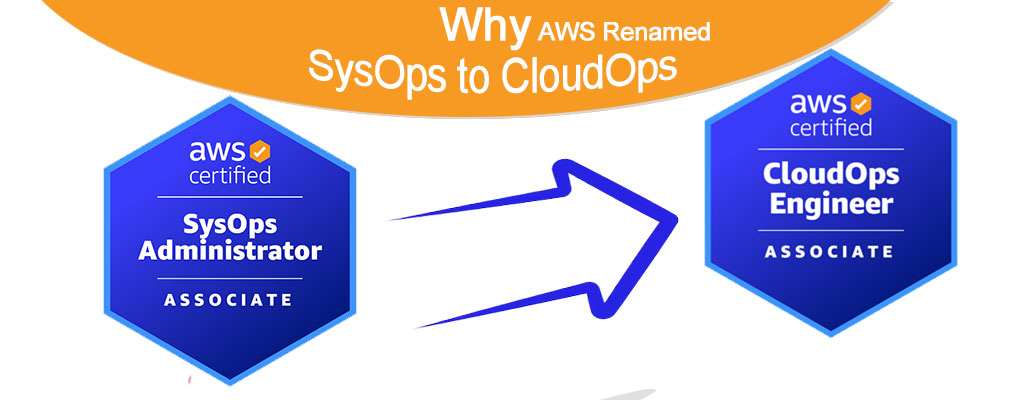
AWS openly states that the certification was renamed to reflect the evolving nature of cloud operations and changing industry terminology. The new credential is officially called AWS Certified CloudOps Engineer – Associate, replacing the older SysOps Administrator title.
Comments are closed.